
The platform
Built around evidence, not engagement metrics.
Three workflows, one infrastructure. Each layer is scoped, bounded, and designed to produce documentation a duty holder can defend.
Inside the conversation
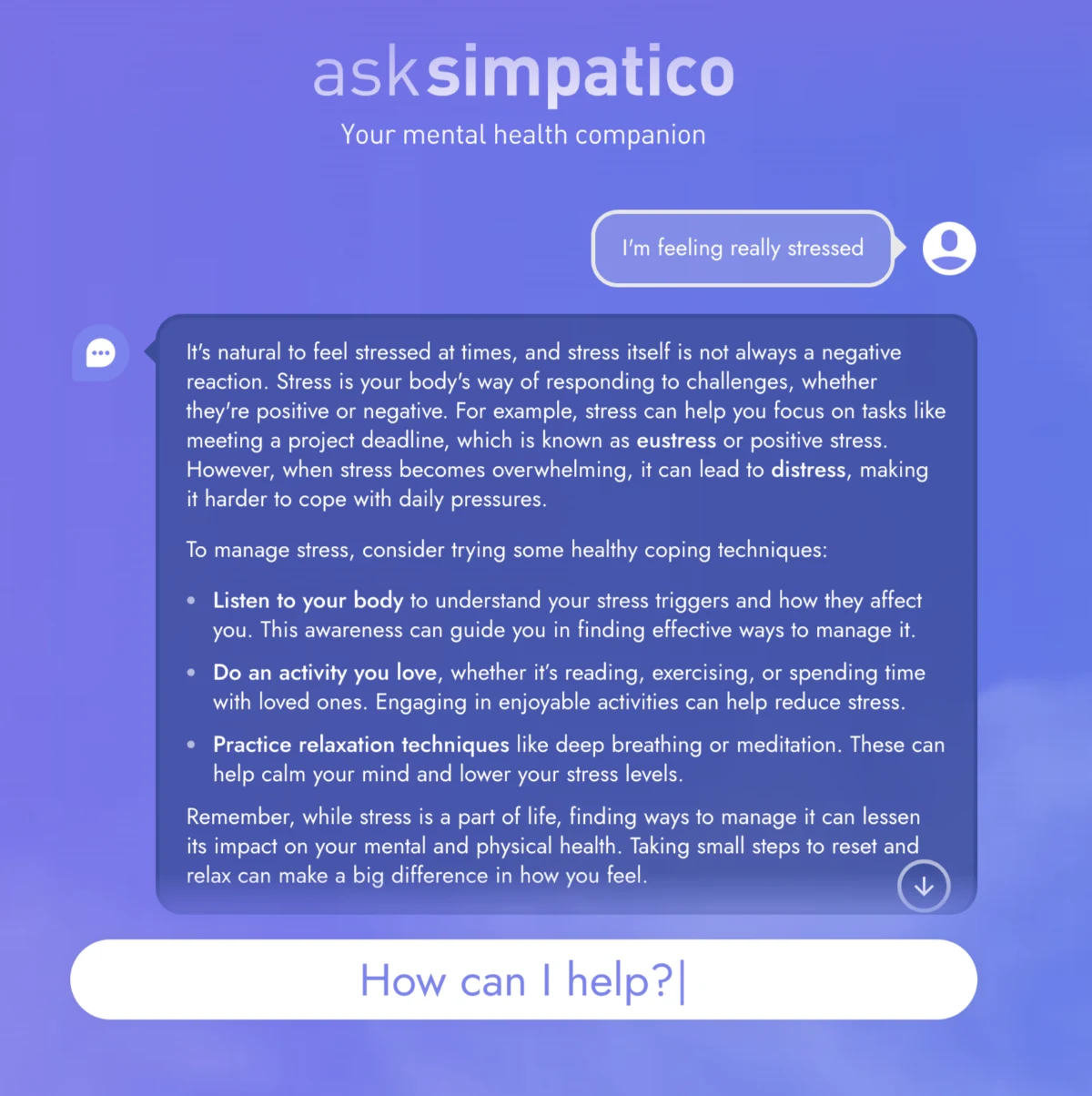
A conversation. Not a form.
Every exchange is structured, mapped live to the recognised psychosocial hazard categories. Workers see a check-in. The organisation sees evidence.
- Plain-language engagement
- Responses mapped in real time to the model Code's 14 hazards
- Anonymous: no login, no identifiers
- Signposts to existing support pathways
01
Engage
Conversational check-in
A lightweight, anonymous conversational interface that meets workers in the flow of work: inside Microsoft Teams or as a standalone app, not on a separate portal requiring a login and a calendar invite.
- Teams-native, or standalone if you don't run Teams
- Anonymous by default
- Available 24/7, not tied to business hours
- Voice or text, in-cab or deskside
- Mobile-first; works on shared devices
02
Navigate
Hazard-mapped triage
Responses are structured against the 14 psychosocial hazards identified in the Safe Work Australia model Code of Practice. Outputs align directly to the framework regulators, boards, and auditors use.
- Mapped to the model Code's 14 psychosocial hazards
- Consistent taxonomy across cohorts and sites
- Signal preserved, individual identity not
- Human-reviewed taxonomy updates
03
Escalate
Signposting, not diagnosis
Where distress indicators are present, the platform signposts to the organisation's existing support pathways. No clinical determination is made. Humans decide.
- Configurable escalation thresholds
- Signposts to existing EAP / clinical providers
- Defined fail-safe pathways
- All escalations logged and reviewable
How the dashboard is read
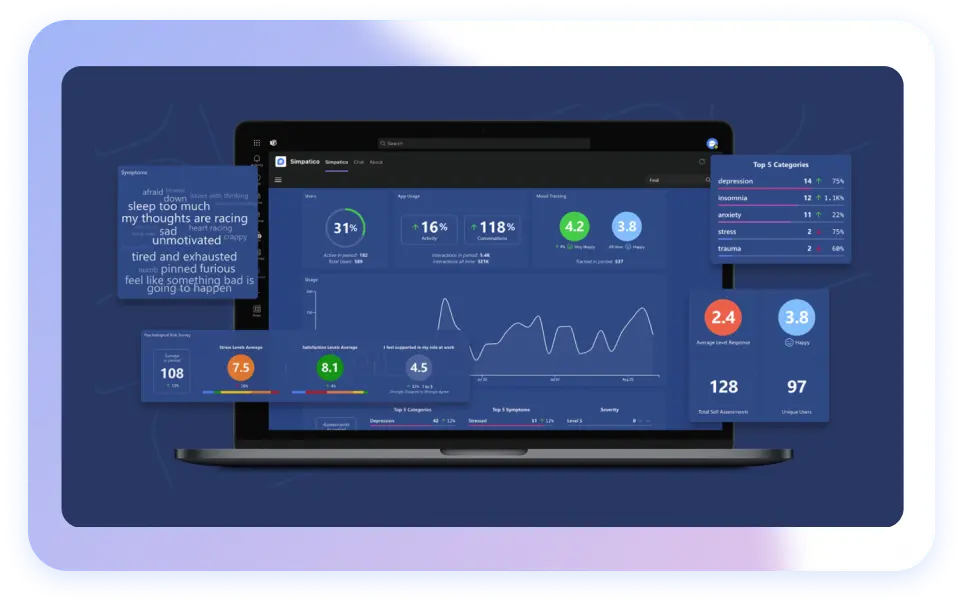
A single view of psychosocial hazard exposure.
De-identified by default. Aggregated by cohort, site, and time. No individual-level views, and no individual-level determinations.
- Hazard category coverage map
- Trend over time, site-by-site
- Successful Intervention Points (SIPs): outcome tracking of engagements that reach support or early intervention
- Cohort comparison with minimum thresholds
- Export-ready for board and WHS reporting
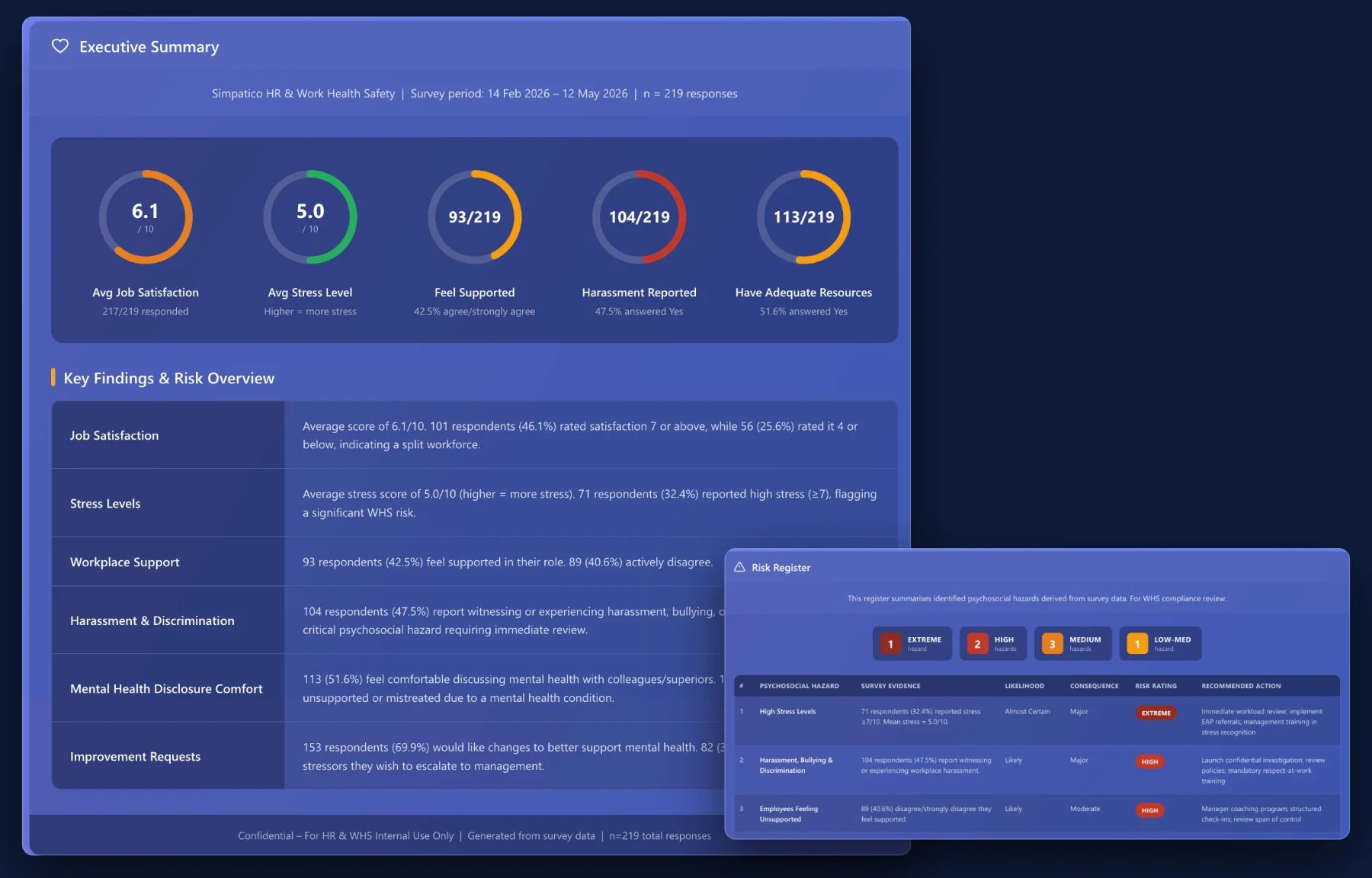
Illustrative reporting view. Cohorts below the minimum reporting threshold are suppressed automatically.
Data handling
Anonymity is an architectural decision.
Not a policy claim.
Anonymous by default
Employee identity is not collected, not stored, and not reconstructable from aggregated outputs.
Sovereign hosting
Data resides in-country. Access is role-restricted and fully audited.
Minimum-cohort thresholds
No report is ever rendered against a cohort smaller than the configured minimum, no matter how the data is sliced.
De-risking adoption
Enterprise ready by design.
The IT, privacy, procurement and risk questions, answered upfront.
Anonymity built in
Structural, not a policy setting. Individual identity cannot be reconstructed from reporting data.
No open-internet data
The AI operates solely on psychologist-curated content. It never scrapes or uses open internet sources.
Microsoft procurement
Acquired via your existing Microsoft contracts. No need to establish a new vendor.
Encryption
All data encrypted at rest and in transit. No conversation data is ever stored in plain text.
Microsoft Azure hosting
Hosted entirely on Azure: onshore, compliant, and within your existing security perimeter.
No individual data access
No employer, manager, IT team or Simpatico admin can read individual conversations.
Built with Microsoft
In Teams. On the marketplace. Through your existing agreement.

Simpatico was co-developed with Microsoft and is available on the Microsoft commercial marketplace, deployable inside Microsoft Teams, procured through the Microsoft agreement your organisation already holds, and hosted on Azure within your security perimeter. Or run it fully standalone in the browser, no Teams required.
Trust & guardrails
AI safety & clinical governance.
Simpatico is a non-clinical support and signal system. AI augments engagement. It does not replace care.
AI does not
- Diagnose or clinically assess employees
- Make treatment recommendations
- Act as a crisis intervention service
- Perform automated employment decisions
- Use open internet or external data sources
- Store any individually identifiable information
AI is limited to
- Pattern recognition across de-identified interactions
- Delivering psychologist-curated guidance pathways
- Directing users to appropriate human support
- Detecting high-risk signals and interrupting interaction
- Generating aggregated, anonymised reporting only
Clinical oversight: Dr Simon Kinsella, Co-Founder & Chief Science Officer. Fellow, APS · Fellow, College of Clinical Psychologists · Independent Medical Examiner · Former Deputy Chair, Psychology Board. Frameworks: DSM-5 and DASS, for signal interpretation rather than diagnosis.
Product screens
See it in action.
Simpatico AI delivers two integrated surfaces: a personal Mental Health Hub for the worker, and a real-time Insights Dashboard for the employer. Both run inside Microsoft Teams with no additional app required, or standalone for organisations that don't use Teams.
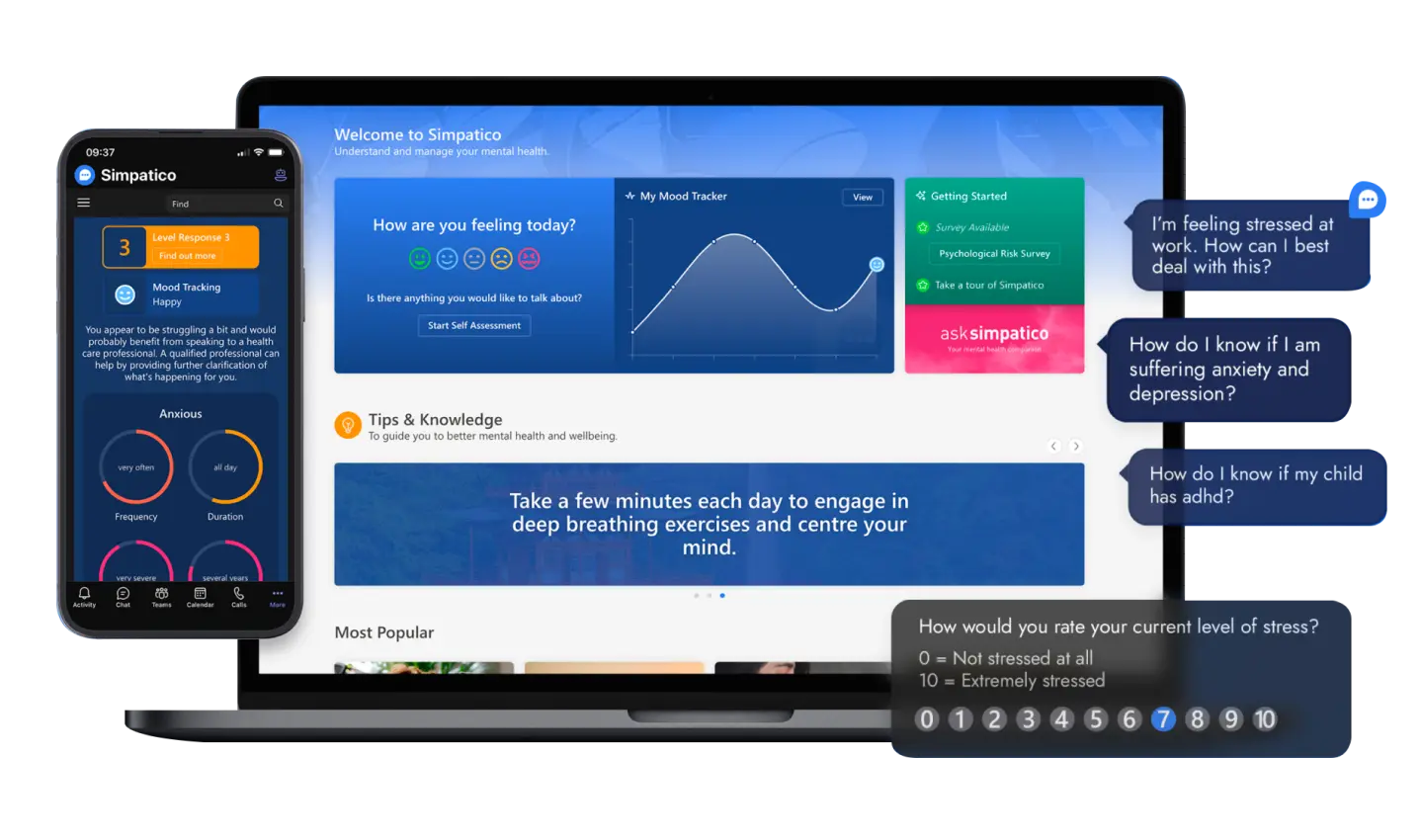
For the worker
Employee Mental Health Hub
Workers engage via a familiar chat interface, on phone or desktop, with regular check-ins, guided conversations, and signposting into the organisation's existing support pathways. No stigma, no intake forms, no referral required.
For the organisation
Employer Insights Dashboard
Real-time, de-identified workforce signal: engagement rates, psychosocial hazard categories, and trend over time. Individual privacy is protected; aggregate risk is surfaced early enough to act on.
5–6×
Engagement is what makes the evidence real: 5–6× a traditional EAP's reach, across three Australian pilots, 2026.
See what your workforce isn't telling you.
A pilot is the fastest way to see Simpatico's engagement, and your psychosocial risk picture, in your own organisation.